
Chutes & Hoppers
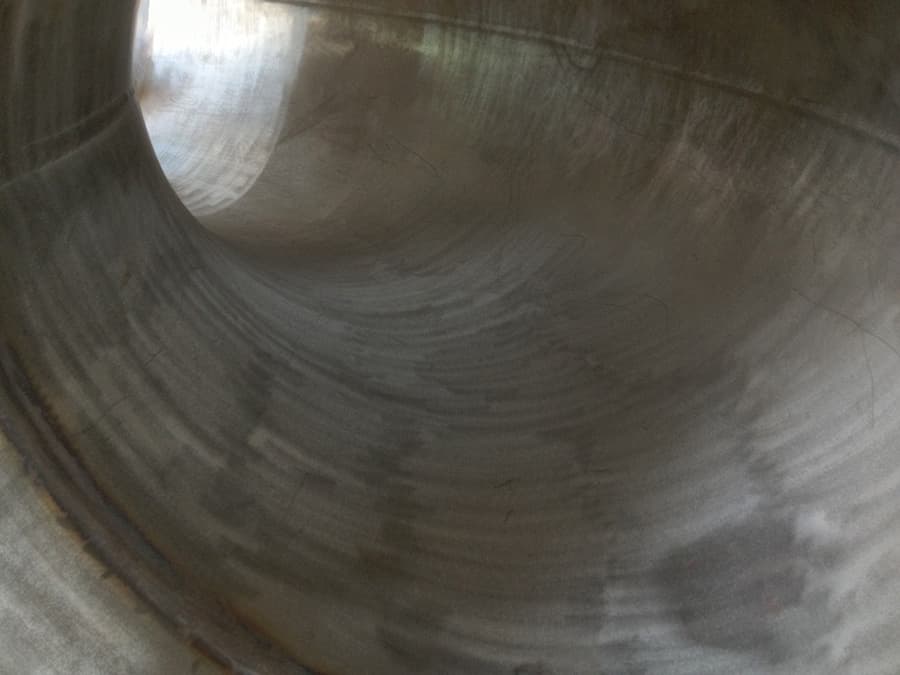
Abrasive wear on chute floors, sliding-flow side walls, and hopper liners drives most of the maintenance scope on bulk-material handling assets. Belzona's ceramic-filled and elastomeric repair systems rebuild the lost wear plate profile and apply a sacrificial wear surface that is replaceable on the same outage cycle.
Our approach
Cold-applied, in place
Repairs and protective coatings applied on-site with no hot work and, in most cases, no shutdown.
Supplied + applied
We supply the Belzona system and our in-house crews apply it — or supply only. Your call.
24-hour support
Emergency response across Baton Rouge, New Orleans, Lafayette, and Lake Charles.
Authorized distributor
The authorized Belzona distributor for Louisiana.
Abrasive wear on chute floors, sliding-flow side walls, and hopper liners drives most of the maintenance scope on bulk-material handling assets. Belzona's ceramic-filled and elastomeric repair systems rebuild the lost wear plate profile and apply a sacrificial wear surface that is replaceable on the same outage cycle.
- Sliding abrasion on chute floors and discharge surfaces under continuous bulk flow.
- Impact damage at transfer points, drop zones, and discharge gates.
- Side-wall thinning on hoppers from bridging and avalanche flow.
- Corner and weld-seam wear at chute-wall junctions.
- Flow disturbance from worn liner steps producing turbulence and accelerated wear.
- External shell corrosion on weather-exposed hoppers.
Wear is a flow-geometry problem
A worn chute or hopper liner is not just a thickness problem. Once the liner steps and pits up, the bulk flow disturbs, and the disturbed flow accelerates further wear at the next downstream high-stress point. Restoring the flow geometry is part of the repair, not just rebuilding wall thickness.
Belzona product families used on chutes and hoppers
Ceramic-filled wear linings
Belzona 1811 (Ceramic Carbide), Belzona 1812 (Ceramic Carbide FP), and Belzona 1813 (Ceramic Z) are silicon-carbide and aluminum-oxide-filled epoxy systems engineered for high-abrasion sliding service. Trowel-applied or spray-applied at specified dry film thickness, they restore the flow profile and provide a sacrificial wear surface that can be inspected and re-topped on the next outage.
Elastomeric impact lining
Belzona 2111 (D&A Hi-Build Elastomer) and the rest of the 2000-series are flexible polyurethane and rubber-lining materials that absorb impact at transfer points and drop zones, where rigid ceramic systems chip out. They are installed by trowel or spray, cold-cured, and bonded to manually prepared steel.
Metal-loss pre-rebuild
Where the underlying chute wall has lost more than nominal thickness, Belzona 1111 (Super Metal) or Belzona 1311 (Ceramic R-Metal) rebuilds back to design profile before the wear topcoat. This avoids the wear lining doing structural duty it was not designed for.
Selection by service
For dry, sliding bulk flow with limited impact (mineral fines, fly ash, dry coal), the ceramic-filled 1811 / 1812 / 1813 family is typically the right answer. For wet slurry with impact (slurry transfer, primary crusher chutes), the elastomeric 2000-series is selected where the impact energy would chip out a rigid lining.
Outage planning
A typical chute lining scope fits inside a 12 to 24 hour outage: clean and prepare the surface, rebuild metal loss where required, apply the wear lining at specified DFT, ambient cure, return to service. Belzona Baton Rouge documents the lining thickness against the next outage so the wear schedule is predictable and not reactive.
What we handle in Chutes & Hoppers
Chute, hopper & transfer point lining
8Cyclone & separator erosion protection
8Pipe bend & elbow lining
5Agitator & mixer wear protection
4Fan blade & deflector erosion repair
4Process vessel & drum lining
3Silos, cement protection
2Slurry pump & impeller protection
2Solid handling equipment
2Bars, wear plates
1Girth weld protection
1Heat exchanger & condenser protection
1Belzona 1331
Erosion-Corrosion Resistant Coating
View productBelzona 1381
High Temperature Immersion Coating
View productBelzona 1811
Ceramic Carbide
View productBelzona 1812
Ceramic Carbide FP
View productBelzona 1813
High Temperature Ceramic
View productBelzona 1814
Heavy-Duty Abrasion Screed
View productBelzona 1818
Surface Tolerant Abrasion Resistant
View productBelzona 9811
Alumina Tile Sheet
View productSeeing this on your equipment?
Our Louisiana team will survey it and recommend the right cold-applied Belzona system — supply, apply, or both, with 24-hour support.