
Heat Exchangers Tube Sheets
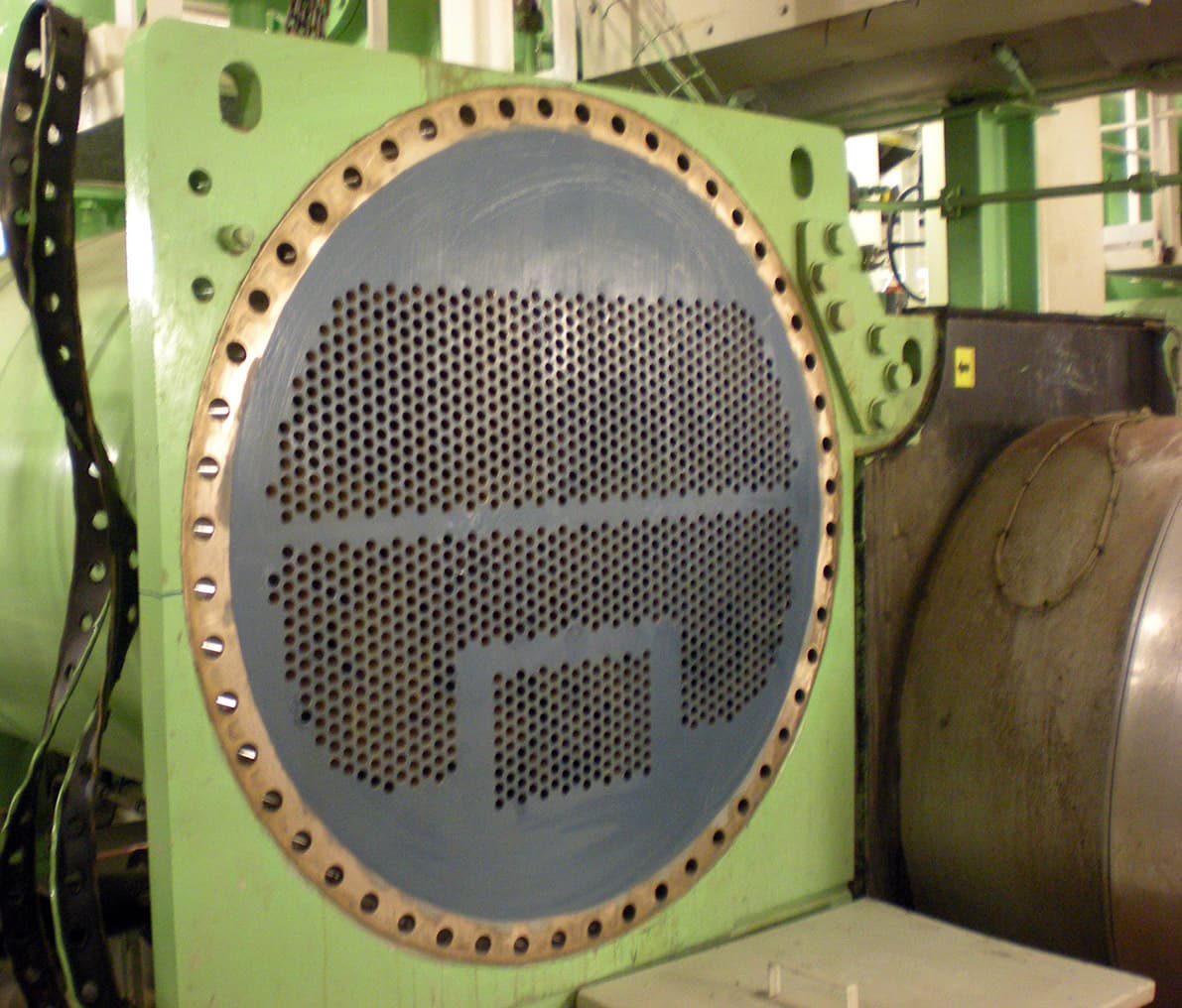
Tube sheet repair is constrained by three things at once: the dimensional tolerance at the tube-to-tube-sheet interface, the dielectric requirement to break the galvanic cell with the bundle, and the inspection interval that defines when the next outage is available. Belzona's tube sheet system is built around those three constraints.
Our approach
Cold-applied, in place
Repairs and protective coatings applied on-site with no hot work and, in most cases, no shutdown.
Supplied + applied
We supply the Belzona system and our in-house crews apply it — or supply only. Your call.
24-hour support
Emergency response across Baton Rouge, New Orleans, Lafayette, and Lake Charles.
Authorized distributor
The authorized Belzona distributor for Louisiana.
Tube sheet repair is constrained by three things at once: the dimensional tolerance at the tube-to-tube-sheet interface, the dielectric requirement to break the galvanic cell with the bundle, and the inspection interval that defines when the next outage is available. Belzona's tube sheet system is built around those three constraints.
- Tube-end pitting and crevice corrosion at the rolled or welded tube-to-tube-sheet joint.
- Tube-sheet face erosion from inlet-end cooling-water turbulence.
- Galvanic corrosion between dissimilar tube and tube-sheet metals.
- Inter-pass leakage at division bars and partition plates.
- Tube-end recession below the original tube-sheet face plane, opening crevice geometry.
- Bypass leakage at the tube-sheet-to-shell gasket seating.
Why tube sheets are repaired separately from the shell
The tube sheet sees a different failure-mode set than the rest of the exchanger. The rolled or welded joint at every tube end is a microscopic crevice; the inlet end of every tube also sees the highest cooling-water velocity. Belzona's tube-sheet treatment is therefore distinct from the standard water-box scope.
Belzona product families used on tube sheets
Tube-end and crevice rebuild
Belzona 1111 (Super Metal) and Belzona 1311 (Ceramic R-Metal) both rebuild metal loss at the tube-end recession and around the tube collar. Selection between them is driven by service temperature and erosion duty; 1311 is the heavier-erosion choice. Properly applied, both seal the crevice that drove the original corrosion.
Dielectric and erosion topcoat
Belzona 1321 (Ceramic S-Metal) and Belzona 1391T are the topcoat selections, applied over the rebuild at specified dry film thickness. Both function as a dielectric barrier between the tube-sheet face and the bundle metal, which arrests the galvanic cell that originally drove the pitting.
Tube-end masking and finish
Tube ends are typically masked at the bore so the polymer does not encroach on the flow area. After cure, the masks are removed and the tube ends are inspected. The repair leaves a smooth, sealed face plane with the original tube-bore geometry intact.
When tube-sheet repair beats re-tubing
Full re-tubing on a large bundle is a multi-week scope and often requires removing the bundle from service. A Belzona tube-sheet treatment is performed in place on the unbolted head, typically over a single shift per side, and adds another inspection interval of corrosion and dielectric protection without disturbing the tubes. On a unit where the tubes themselves are still within wall-thickness tolerance, this is the lower-risk path.
Inspection-cycle alignment
Belzona Baton Rouge schedules tube-sheet rebuilds against the plant's exchanger inspection cycle so the polymer life is matched to the next planned outage. The rebuild file (PSS, IFU, application record) is filed with the asset record so the next inspector sees what is on the surface.
What we handle in Heat Exchangers Tube Sheets
Seeing this on your equipment?
Our Louisiana team will survey it and recommend the right cold-applied Belzona system — supply, apply, or both, with 24-hour support.